Steve’s Blog

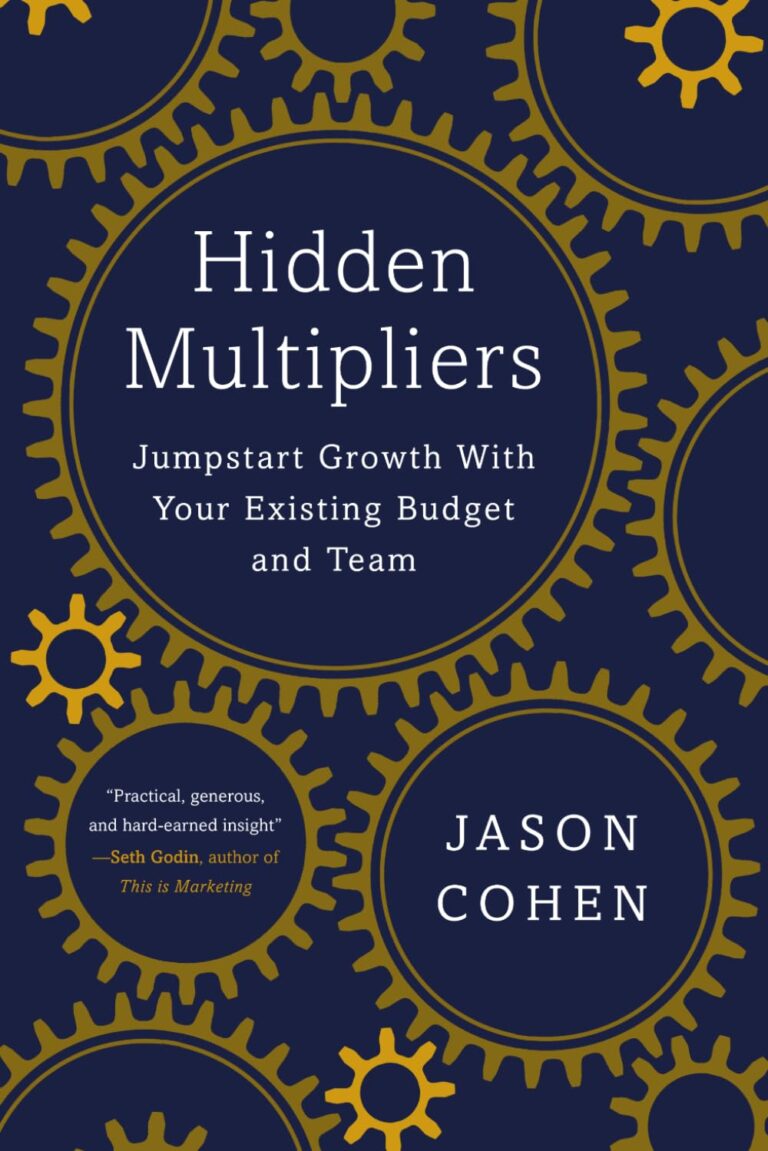
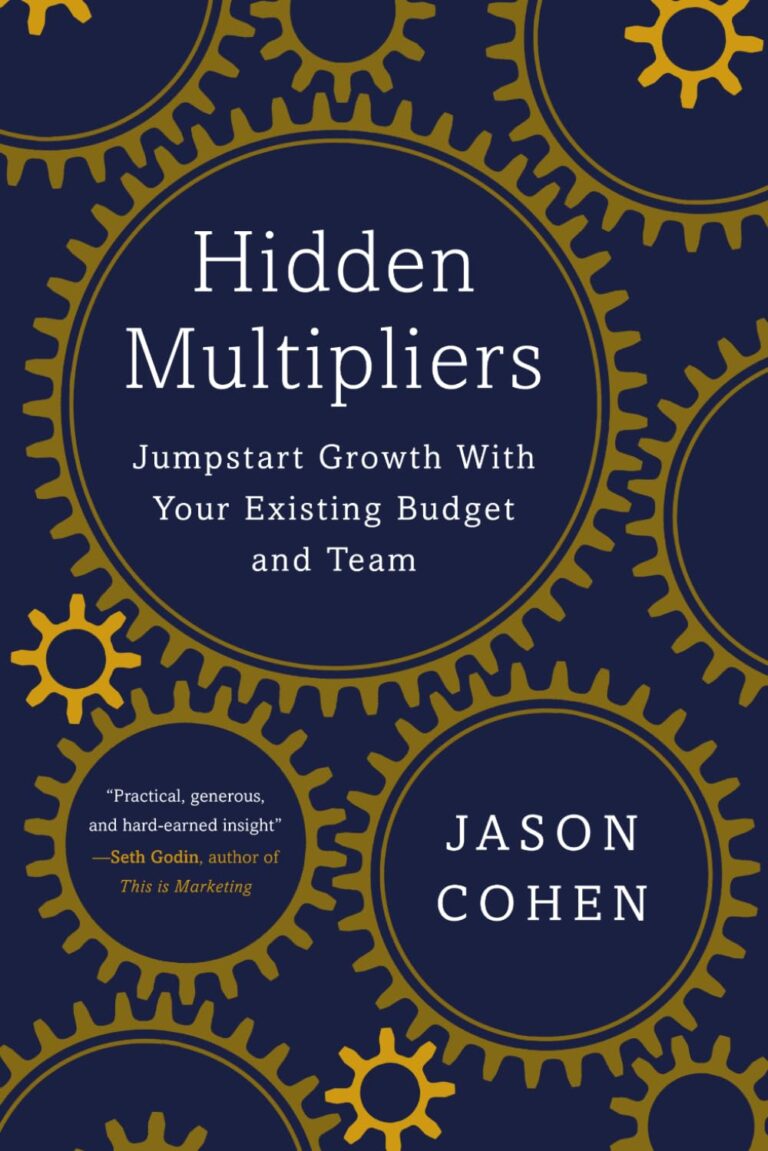
Cover of Hidden Multipliers: Jumpstart Growth With Your Existing Budget and Team by Jason Cohen

Review: Hidden Multipliers by Jason Cohen

  • Author: Jason Cohen
  • Publisher: Team Cohen
  • Published: August 10, 2026
  • Pages: 285
  • ISBN: 979-8997209902

I have disclaimers for this review. Jason has joined me for a podcast episode before, and after reading this book, I invited him on again. It’s an excellent business book. There’s no wasted space in it. It’s about 200 densely packed pages.

It’s truly a slow read because every few sentences you stop to jot down ideas. I also had an AI tool open while reading. Jason would explain a business metric or idea, and I’d use AI to follow on. For example, in an early chapter, he talks a lot about sorting customers by profitability. By the end of the chapter, Claude had created a whole dashboard for me to see our customers through Jason’s suggested lens.

Jason admits that a lot of his advice is situation-dependent. How do you know which applies to you? By understanding your customers deeply. Almost every chapter recommends that you connect deeply with the customer: talking with them, analyzing them, sorting them. I’ll keep coming back to this book over the next few months.
Read MoreReview: Hidden Multipliers by Jason Cohen
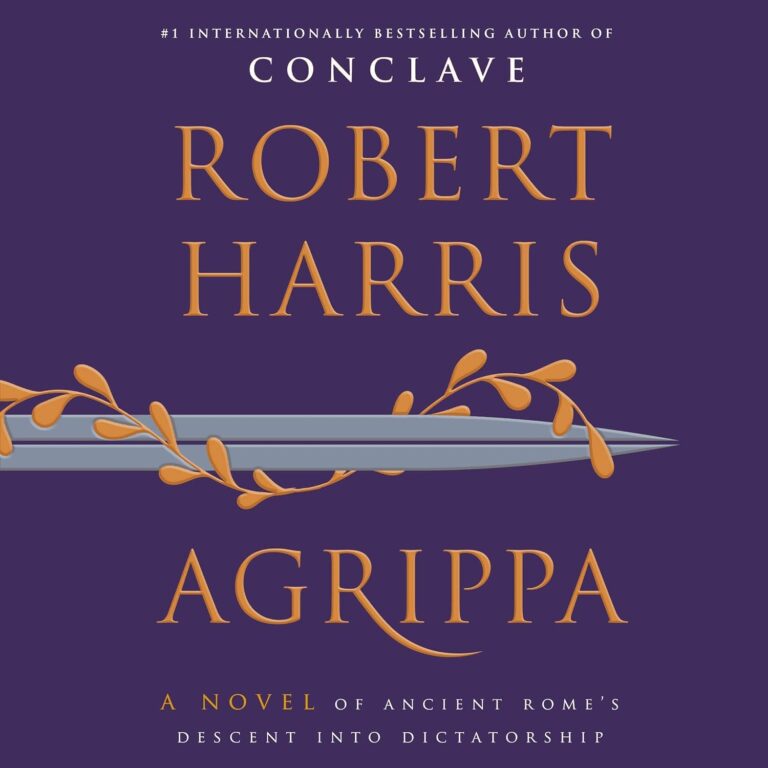
Cover of Agrippa: A Novel of Ancient Rome's Descent into Dictatorship by Robert Harris

Review: Agrippa: A Novel of Ancient Rome’s Descent into Dictatorship by Robert Harris

  • Author: Robert Harris
  • Publisher: Random House Audio
  • Published: September 1, 2026

I’ve started a lot of Robert Harris books, but not finished many of them. He’s written nearly 20 novels, so it’s not surprising that some fit my taste better than others. Agrippa was one I finished, and quickly. It has the same style as his Cicero trilogy: a fake biography/autobiography. Agrippa was the right-hand man of Augustus, the first Roman emperor, and this story is written from the point of view of Agrippa at the end of his life. The best word I have for Harris’s writing style is “punchy”. The book opens like this:

I came into the world feet-first — a dangerous way to live.
Aegri partus, the doctors called it. A painful birth.
My mother did not survive.

I heard an interview with the author where he said his writing is designed to be read aloud, and I believe him. His writing is short, sharp, and always favors action over description. That style is probably even more pronounced in this book, as it’s mimicking the voice of an old soldier. But there’s also a lot of imagination involved here, because we know very little about Agrippa and almost none of his writing survives. In contrast to Cicero, Agrippa’s life is a blank canvas.

This ended up being my favorite Harris novel so far. He has some strong opinions and really paints a brutal picture of Augustus, who seems, unfortunately, to have become a hero for some in Silicon Valley. There’s also a major twist late in the book that genuinely made me rethink much of what I’d read to that point.

Read MoreReview: Agrippa: A Novel of Ancient Rome’s Descent into Dictatorship by Robert Harris
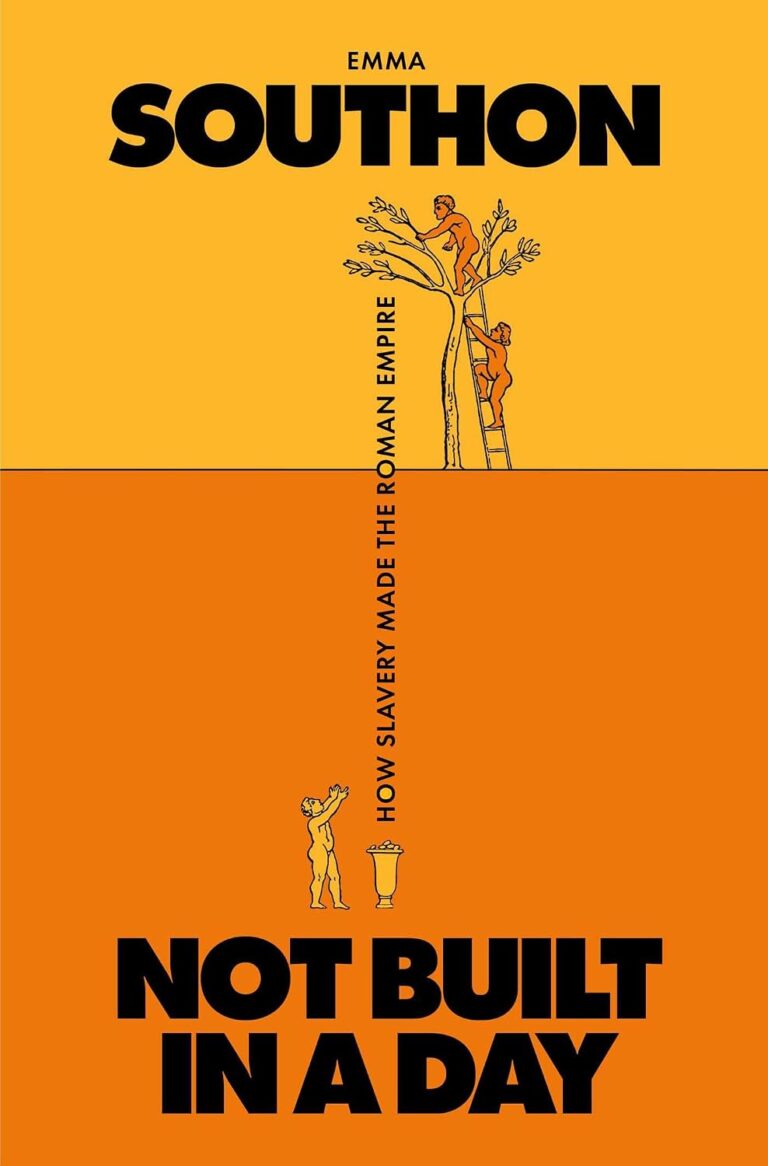
Cover of Not Built in a Day: How Slavery Made the Roman Empire by Emma Southon

Review: Not Built in a Day: How Slavery Made the Roman Empire by Emma Southon

  • Author: Emma Southon
  • Publisher: Simon & Schuster
  • Published: June 30, 2026
  • Pages: 448
  • ISBN: 978-1668089552

Some people are going to hate this book. I can hear the complaints already. Emma Southon’s writing is an acquired taste. Here’s a typical quote:

“Historians have read the statements of slave owners as truthful and objective, rather than the self-conscious constructions of those justifying slave ownership. I’m sorry but: Fuck that.”

Yep, this is a very different approach to history. The author is deliberately provocative and writes for people who might not normally be interested in ancient history.

The author is also taking a different approach with her topic. I’ve never seen a book on Roman slavery before. I looked on Amazon and could only find a few old, bone-dry, overly academic books.

That quote above sums up what she wants to do with this book. She thinks that people have glossed over the horrors of Roman slavery. Yes, she says, it really was as bad as slavery in every other era and area of the world. She explains that the Roman economy became absolutely underpinned by slavery. It didn’t start that way, but after victories in Gaul, Carthage, Spain and elsewhere, they rebuilt their economy around free labor.

The author explains that there was a wide variety of slave experiences, from work in agriculture, mines and households to service in the military and the gladiatorial arena. One key limitation is that slaves rarely left much written evidence, so the author has to infer a lot of details from somewhat thin evidence.

Overall, the best way I can explain this book is that it’s like a really good podcast episode. It’s educational and entertaining, but you expect some inaccuracies and a few cringey moments.

Read MoreReview: Not Built in a Day: How Slavery Made the Roman Empire by Emma Southon
Cover of Hidden Multipliers: Jumpstart Growth With Your Existing Budget and Team by Jason Cohen

Review: Hidden Multipliers: Jumpstart Growth With Your Existing Budget and Team by Jason Cohen

  • Author: Jason Cohen
  • Publisher: Team Cohen
  • Published: August 10, 2026
  • Pages: 285
  • ISBN: 979-8997209902

I have disclaimers for this review. Jason has joined me for a podcast episode before, and after reading this book, I invited him on again. It’s an excellent business book. There’s no wasted space in it. It’s about 200 densely packed pages.

It’s truly a slow read because every few sentences you stop to jot down ideas. I also had an AI tool open while reading. Jason would explain a business metric or idea, and I’d use AI to follow on. For example, in an early chapter, he talks a lot about sorting customers by profitability. By the end of the chapter, Claude had created a whole dashboard for me to see our customers through Jason’s suggested lens. I recommend you do the same. Don’t just read this book: apply it.

Jason admits that a lot of his advice is situation-dependent. How do you know which applies to you? By understanding your customers deeply. Almost every chapter recommends that you connect deeply with the customer: talking with them, analyzing them, sorting them. I’ll keep coming back to this book over the next few months.
Jason was also good enough to come on an episode of the PublishPress podcast where I interviewed him for an hour about the book:

Read MoreReview: Hidden Multipliers: Jumpstart Growth With Your Existing Budget and Team by Jason Cohen
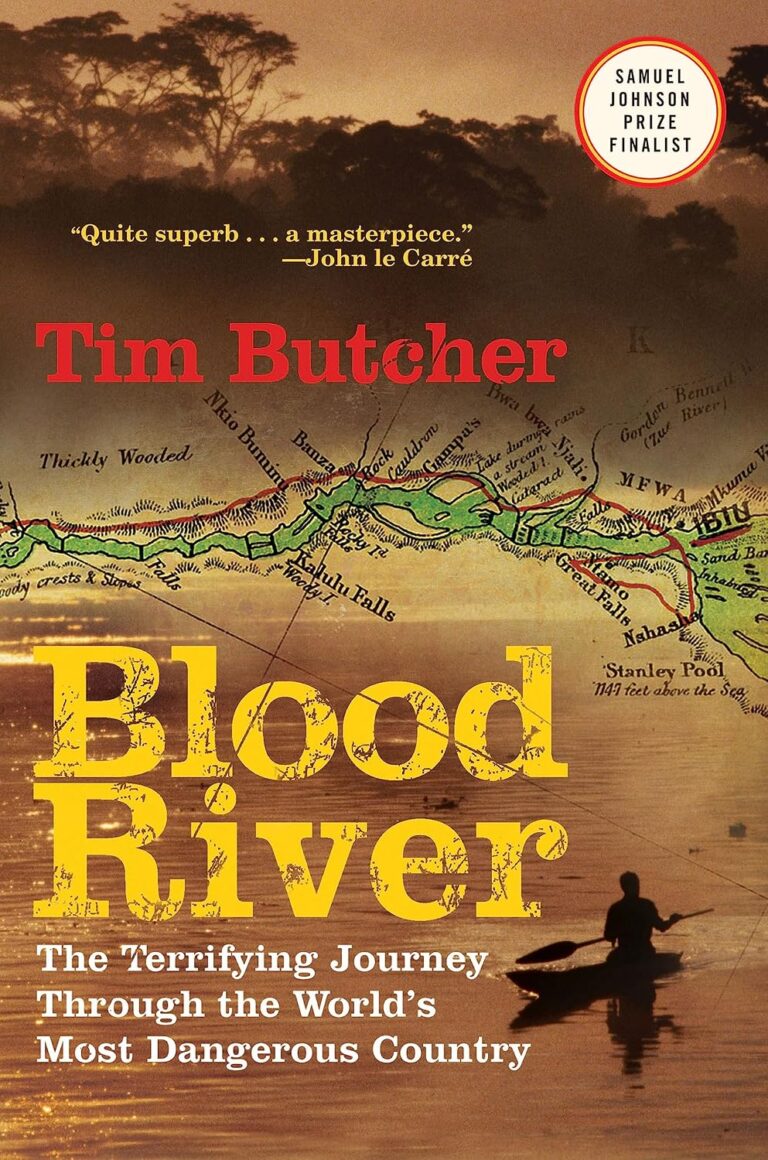
Cover of Blood River: The Terrifying Journey Through The World's Most Dangerous Country by Tim Butcher

Review: Blood River: The Terrifying Journey Through The World’s Most Dangerous Country by Tim Butcher

  • Author: Tim Butcher
  • Publisher: Grove Press
  • Published: September 1, 2009
  • Pages: 384
  • ISBN: 978-0802144331

This is a travelogue where the author tries to re-create a journey that Henry Stanley took through the Congo in the 1870s. He mapped the river for the first time, starting oj the east coast of Africa, finding the source of the Congo, and traveling all the way to the Atlantic. Stanley then helped Belgium take over the region, which turned into a genuine disaster.

I have mixed feelings about this book. It kept me turning the pages and gave a solid introduction to the history of the Democratic Republic of the Congo. I’ve visited North Africa, grew up in England surrounded by people from south-east Africa, and I’ve been fortunate to know and work with many great people from West Africa. But I knew next to nothing about the Congo area, and this book filled that gap. I didn’t realize how often the area appeared in Western culture: the author covers everything from books including Heart of Darkness and The Poisonwood Bible to movies like The African Queen.

On the negative side, there was a “ruin porn” vibe. At some points, the eastern part of the DRC felt like a place from a dystopian novel, a real-life version of “The Last of Us”. Was that overblown? I wasn’t there on the author’s journey, but the whole approach matched the subtitle “The Terrifying Journey Through The World’s Most Dangerous Country”. The author aims to show that this was a high-functioning region until the 1950s, but that it has suffered multiple decades where that development was thrown into reverse.

The author’s history lesson was more interesting than his journey (which he didn’t complete). I don’t know enough to judge if the bleakness of the book is fair.

Update

A while after reading this book, I was still interested in the topic, but felt like I wanted to learn more. Here’s what else I was able to find so far:

  • King Leopold’s Ghost: The most useful book on this list. The author was a journalist in the DRC in the 1960’s and really gives perspective on the country’s issues.
  • The Siege of Jadotville: Medicore movie and better book about an Irish regiment in the DRC just after independence.
  • Anthony Bordain: Watchable but definitely some ruin-porn in the style of Blood River.
  • When We Were Kings: Great movie about the Rumble in the Jungle between Ali and Foreman, not too much on Zaire.
Read MoreReview: Blood River: The Terrifying Journey Through The World’s Most Dangerous Country by Tim Butcher
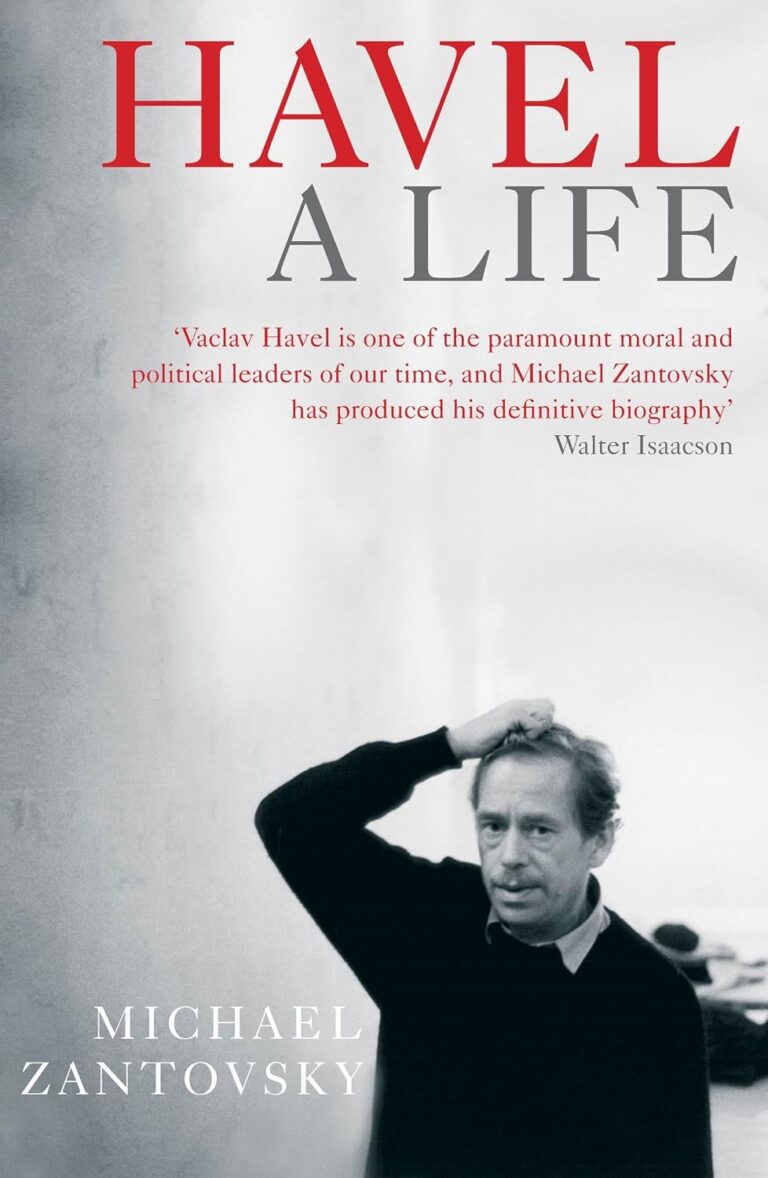
Cover of Havel: A Life by Michael Zantovsky

Review of Havel: A Life by Michael Zantovsky

  • Author: Michael Zantovsky
  • Publisher: Grove Press
  • Published: Nov 04, 2014
  • Pages: 512
  • ISBN: 9780802123152

This was my favorite pure biography in several years. I give it high praise because you don’t just learn about Václav Havel, but also the history of Prague and Czechoslovakia during the 1900s. I admit to knowing absolutely zero about the city and country before this book.

The writer was Václav Havel’s press secretary during many of his years as a politician. But he doesn’t hold back on Havel’s flaws. Havel comes across as a very complicated man. He’s a successful playwright, a party animal, a womanizer, and the brave center of a network of opposition to the communist government. This bio reminded me of one I read a few years ago about Nelson Mandela. Both were very complex men, but both were able to push their countries in a better direction, and both ended up as national leaders.

I liked Havel at the end of the book. He successfully managed two huge transitions for his country, the first when communism fell, and the second when Slovakia split from the Czech Republic.

The book wasn’t a translation. The author became Havel’s ambassador to the USA and writes genuinely excellent English.

Read MoreReview of Havel: A Life by Michael Zantovsky

This Week in WordPress #375 on WP Builds

I joined Nathan Wrigley and the WP Builds panel for episode 375 of This Week in WordPress, titled “It’s All Up and Down,” recorded on June 9th, 2026. The conversation ranged across recent WordPress ecosystem news with a strong focus on the rapidly evolving intersection of AI and security — including new challenges for tools like Wordfence and Patchstack as AI-generated vulnerabilities and “AI slop” continue to grow as a threat vector.

Read MoreThis Week in WordPress #375 on WP Builds

Community + Code Podcast: Episode 23

I was a guest on the Community + Code podcast, hosted by Chris Reynold. This ia show that explores the stories behind people who build in open source. In episode 23, I shared how I got started — from teaching in rural Georgia to building websites on the side, and eventually finding my way into the WordPress plugin world. It was a fun conversation about the winding road that leads people into open source.

Read MoreCommunity + Code Podcast: Episode 23

Creating Better Publishing Workflows in WordPress on WP Minute+

I joined Eric Karkovack on the WP Minute+ podcast to talk about publishing workflows in WordPress. As founder of Ramble Ventures, I shared my journey through open source, the evolution of WordPress as a publishing platform, and how PublishPress has grown to help content teams work better. We also got into the role of AI in development and customer support, and where I see things heading next.

Read MoreCreating Better Publishing Workflows in WordPress on WP Minute+

This Week in WordPress #357 on WP Builds

I joined Nathan Wrigley, Michelle Frechette, and Marcus Burnette for episode 357 of This Week in WordPress on WP Builds, nicknamed “Eat the Banana.” We covered the release of WordPress 6.9 RC3, the return of WordPress to three major releases in 2026, and a wide-ranging discussion on AI in WordPress core — including the debut of the experimental AI Experiments plugin.

Read MoreThis Week in WordPress #357 on WP Builds